Closed-Cell vs Open-Cell Spray Foam: Which One Does Your Home Need?

Ask for spray foam and you'll be asked a question back: closed-cell or open-cell? They come out of the same kind of spray rig, but once cured they are almost opposite materials — and picking the wrong one for a space wastes money or performance. Here's the honest comparison we walk through at every site assessment.
The short version
| Measure | Closed-cell | Open-cell |
|---|---|---|
| R-value per inch | ≈ R-6 to R-7 | ≈ R-3.5 to R-3.7 |
| Density & feel | Dense, rigid, hard | Light, soft, spongy |
| Air sealing | Yes — air barrier | Yes — air-seals the cavity |
| Vapour control | Vapour barrier at about 2 inches | Vapour-permeable |
| Structural strength | Adds racking strength | No structural contribution |
| Sound dampening | Good | Excellent |
| Best for | Attics, crawl spaces, exterior & below-grade walls | Interior walls, floors between storeys, large cavities |
Where closed-cell earns its keep
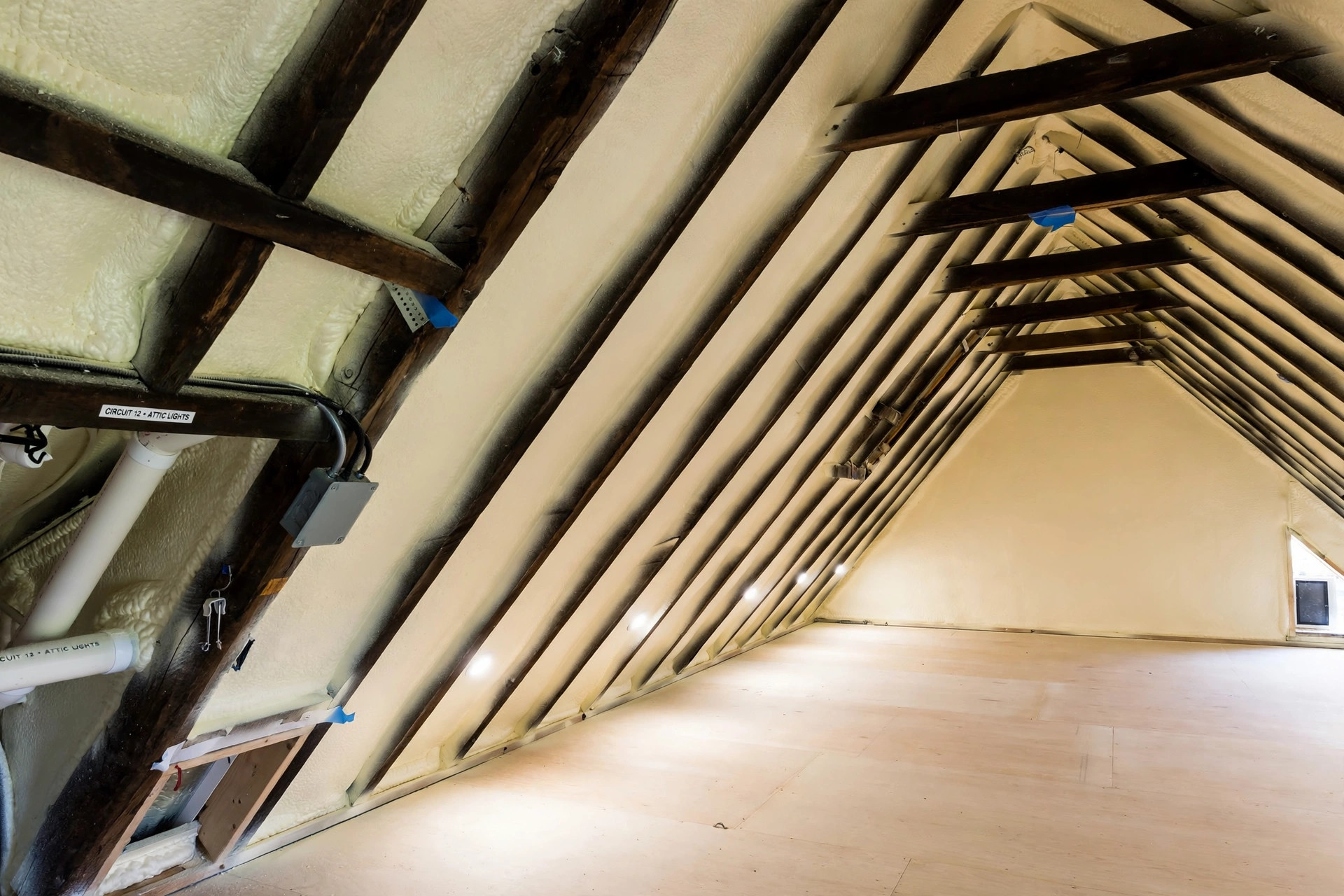
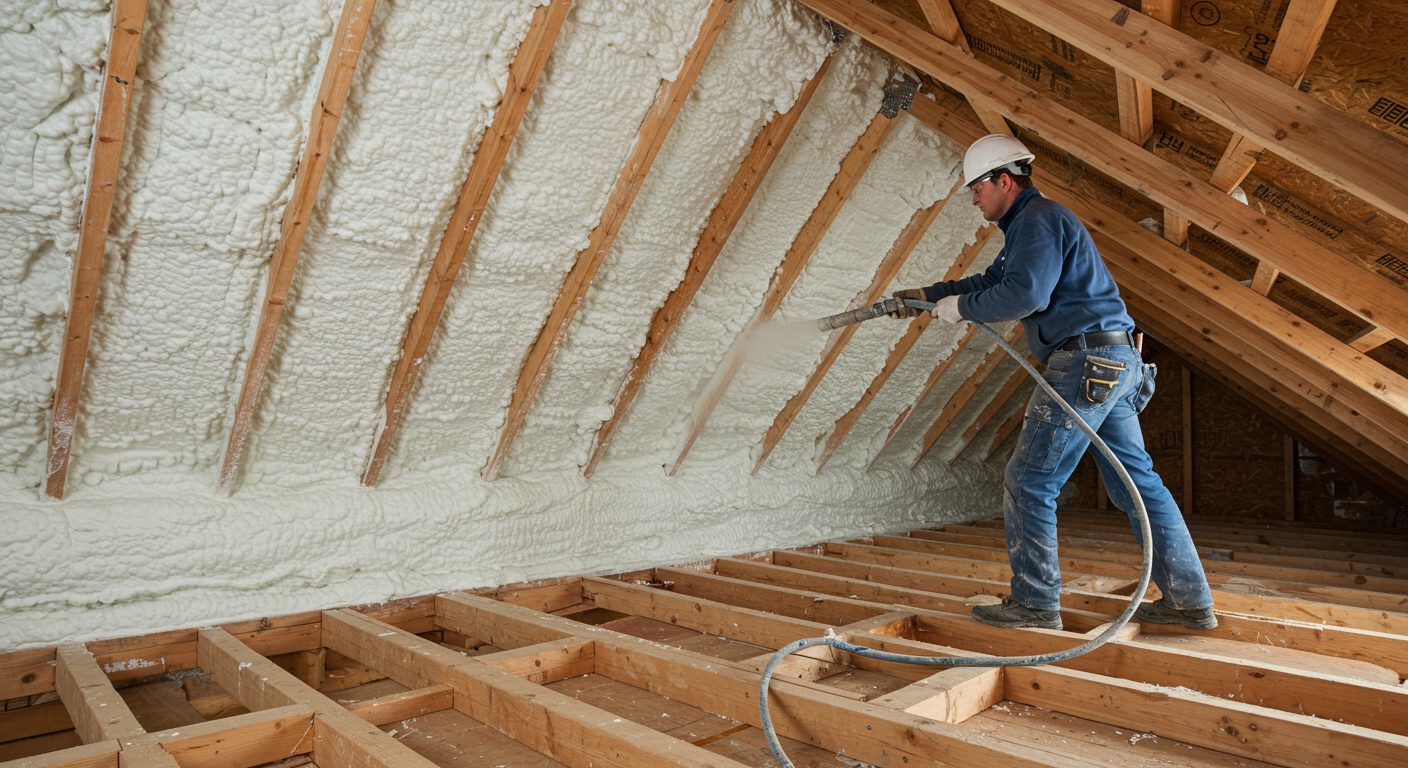
Closed-cell foam packs the highest R-value per inch of any common insulation, so it's the answer wherever space is thin and performance matters: the underside of a roof deck, a 2x4 wall that must hit code, a crawl space or a below-grade basement wall. Because it is also a vapour barrier and resists water, it's the safe choice anywhere moisture shows up — and its rigidity genuinely strengthens the assembly it's sprayed into.
Where open-cell is the smarter buy
Open-cell foam expands much more, so it fills big, irregular cavities completely at a lower cost per covered area. It's vapour-permeable, which suits interior assemblies, and its soft structure absorbs sound beautifully — the right pick between bedrooms, around a home theatre, or between floors. In a deep attic floor, it often delivers the best comfort per dollar.
Most homes use both
The real answer is rarely one or the other. A typical Toronto project sprays closed-cell in the attic and rim joists, open-cell in interior walls for sound, and closed-cell again below grade. Your quote should say, area by area, which foam is specified, at what thickness, and what R-value that delivers. If a quote just says 'spray foam', ask for the breakdown — ours includes it by default.
Thinking about spray foam? Get it quoted properly.
Book a free site assessment — 51SPF measures your space, recommends the right foam for each area, and quotes it transparently with the ROI in writing.